
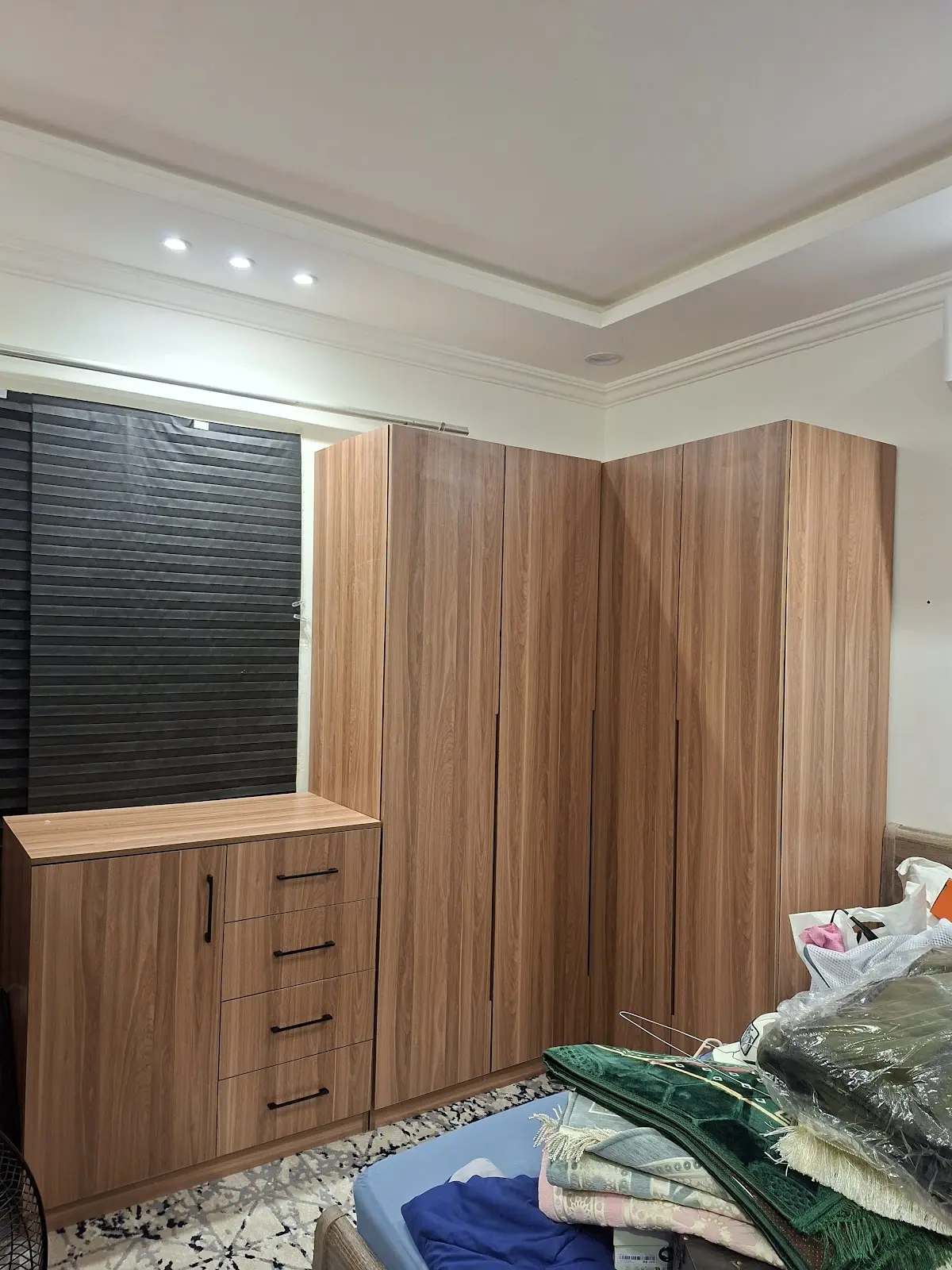
Start with what you actually use
A useful layout starts with the contents and daily routine, not the door style. Count long and short hanging items, folded clothes, shoes and accessories. This turns a vague need for “more space” into a measurable brief.
Observe your current wardrobe for a week. Note what is difficult to reach, where items pile up and which areas remain unused.
- Separate daily and seasonal clothing.
- Estimate long hanging items such as abayas and dresses.
- Decide what belongs in closed drawers versus open shelves.
- Keep some flexible space for future needs.
Balance hanging, shelves and drawers
Double hanging makes use of height for shirts and trousers, while dresses and abayas need one uninterrupted tall bay. Shelves work well for folded items, and drawers contain smaller pieces.
| Storage | Best for | Planning note |
|---|---|---|
| Long hanging | Abayas, dresses, coats | Keep one full-height bay |
| Double hanging | Shirts and trousers | Uses vertical space efficiently |
| Drawers | Accessories and small items | Place at a comfortable height |
| Adjustable shelves | Folded clothes and bags | Can change with your needs |
Keep daily items within easy reach
Place frequently used items between waist and eye level, seasonal storage above and heavier items below. Check that drawers and handles remain clear of adjacent doors and furniture.
Verify the room before approval
Measure more than the wall width: review height, skirting, sockets, switches, air conditioning and nearby doors. Ask to review the internal layout before fabrication, or send initial measurements through the quote request form.
Next step
Explore the services or prepare a site visit request with the information you have.
ServicesRequest a visit